My Rare Prada FW 2012 Bag: When Luxury Handbags Were Engineering Masterpieces
My black patent AW 2012 Prada bag, with a hinged metal-framed lower compartment and a beige leather interior, and why I am selling it on Vestiaire Collective.
I have collected Prada for years. I own vintage Prada handbags, shoes from the 1990s, beautifully made Prada coats and dresses, and even two extraordinary preloved Prada velvet and metal sofas. But this particular handbag stands apart from almost everything else in my collection.
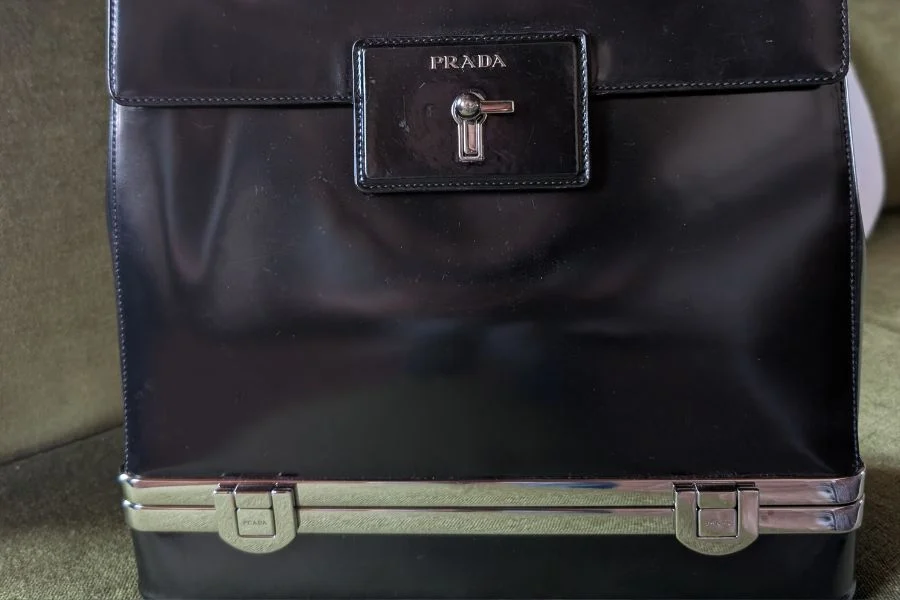
It is an extraordinary black patent leather Prada attributed to the Autumn/Winter 2012–13 collection, with a design associated with runway Look 15.The runway version I have been shown is in a different colour. Mine is black patent leather, with beautiful polished silver-tone hardware and an exceptionally preserved soft leather interior.
When I first examined this bag, I believed it might date from the 1990s. Its construction reminded me so strongly of an earlier period of experimental Italian luxury design. Learning about its possible connection to Prada's 2012 runway collection has made it even more fascinating.
I live in Tuscany, close to Prada's offices and outlet, and I regularly speak with people who work for the brand. I have spent years looking at Prada's products, learning about its materials and appreciating the remarkable creativity of Miuccia Prada. And there is something I feel strongly about.
I do not see Prada making handbags of this particular construction for its mainstream boutiques today. That is why I believe this bag deserves far more attention than an ordinary second-hand designer accessory.
Prada Autumn/Winter 2012: Fashion Meets Architecture
Prada's Autumn/Winter 2012–13 collection was a fascinating moment in the house's design history. Miuccia Prada presented strong geometric forms, dramatic proportions, experimental surface treatments and accessories that looked almost like futuristic objects. The collection was theatrical, intellectual and unapologetically individual.
The handbags were particularly interesting. Rather than relying simply on a familiar logo or fashionable shape, they became integral parts of the collection's visual language. My bag appears to belong to that remarkable design period. Its strong rectangular shape, glossy black exterior, substantial polished metalwork and intricate opening mechanism make it feel more like an engineered object than a conventional handbag. It is precisely the kind of unusual design that attracted me to collecting vintage Prada in the first place.
A Handbag Built Like a Piece of Engineering
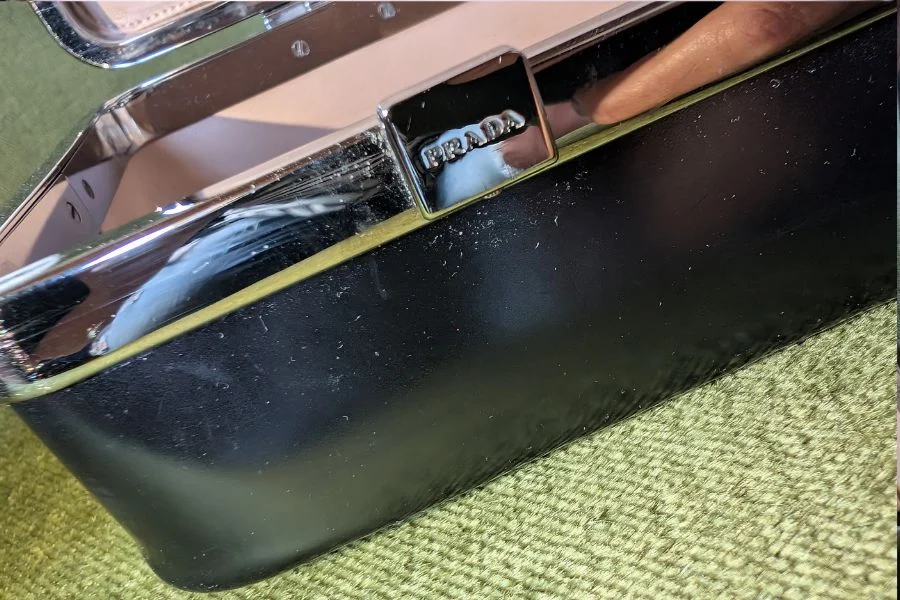
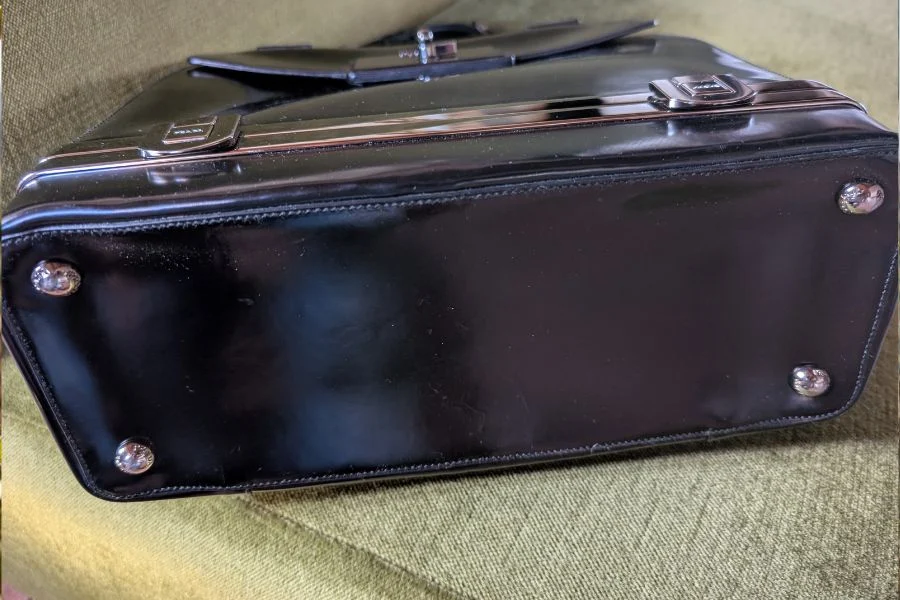
What makes this handbag exceptional is not simply its appearance. It is the way it has been constructed. Look closely at the polished metal frame running around its lower section. This is not a thin decorative strip added to make an inexpensive handbag look luxurious. It is a substantial structural feature, incorporating hinges and an opening compartment.
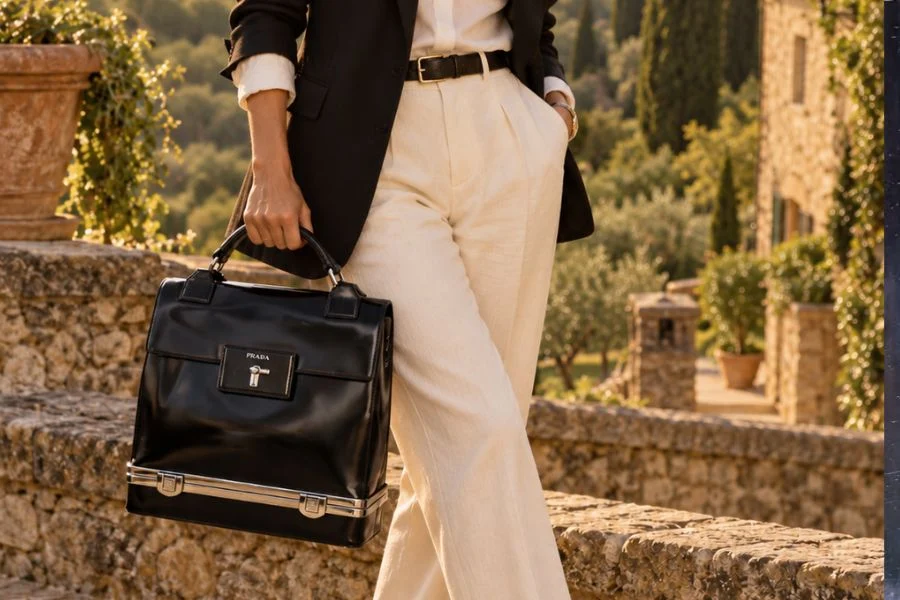
The hardware is beautifully executed, with Prada engraving on individual fittings. The handle attachments are substantial. The front closure is distinctive and sculptural. The metal components give the entire handbag an architectural quality.
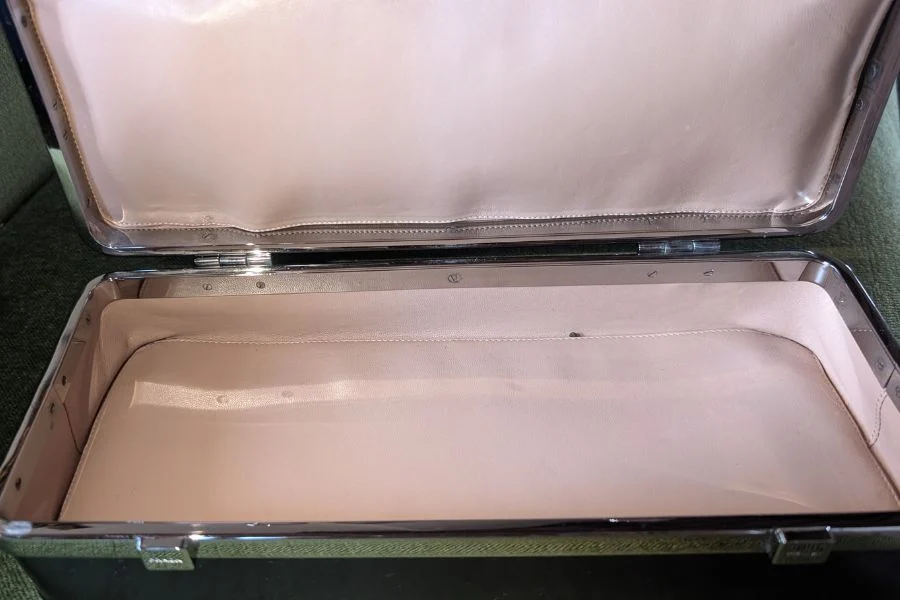
Then there is the remarkable separate lower compartment. Opening it reveals another beautifully finished interior, lined with soft pale leather. It reminds me of the elaborate compartments once found in luxury Italian travel trunks and vanity cases.
Everything feels deliberate. I particularly admire the contrast between the materials: the glossy black patent exterior, the polished silver-tone metal and the exceptionally soft beige leather inside. This is not simply a handbag designed to carry personal belongings. It is a design object that happens to be functional. For me, this is where fashion becomes engineering.
The Interior Is Extraordinary
I have bought and sold enough vintage luxury handbags to understand that condition can make an enormous difference. A beautiful exterior means very little if the interior has been neglected.
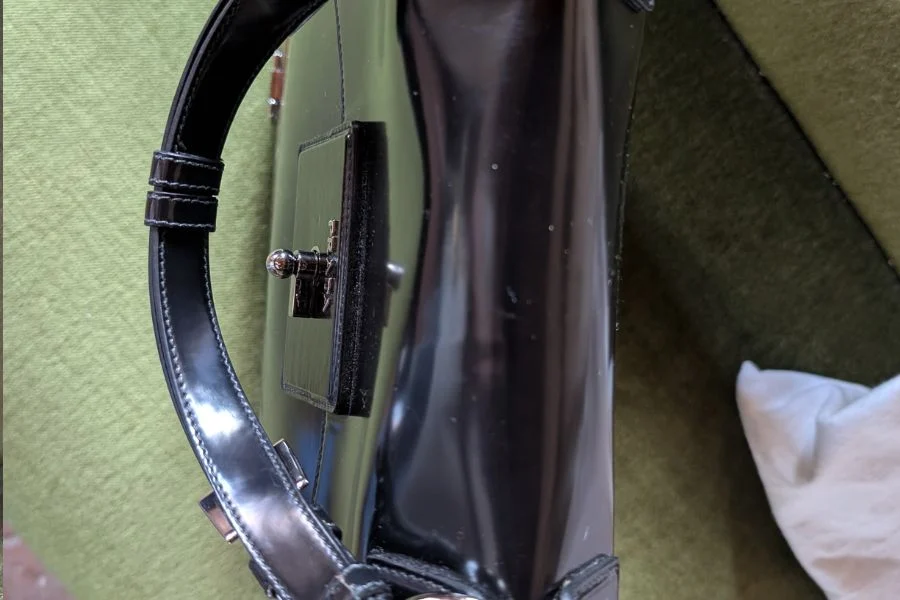
This Prada has had just one owner and has been used very rarely. The black patent leather exterior retains its beautiful glossy finish. There are some minor superficial marks associated with age and storage, which I have photographed honestly.
A specialist in vintage patent leather may be able to improve some of these marks, although I would never attempt an unsuitable treatment myself. But the interior is something else entirely.
The soft beige leather is exceptionally well preserved. There are no visible stains, marks from pens, obvious scratches or the usual signs of handbags that have spent years carrying everyday belongings. The leather is soft, supple and beautiful to touch. The second compartment is equally impressive. It is rare to open a handbag of this age and discover an interior that appears almost untouched. For a collector, this matters enormously.
My Prada Sofas and the Connection to Italian Design
My appreciation of Prada goes well beyond fashion. I own two unusual preloved Prada sofas incorporating velvet and metal.
I have always loved how Prada combines contrasting materials and creates objects that feel both luxurious and slightly unconventional. The sofas are a wonderful example of the visual relationship between soft textiles and harder structural elements. When I look at this handbag, I see a similar design philosophy.
The soft leather interior contrasts beautifully with the metal frame. The glossy patent exterior is almost sculptural. The structure is not hidden. It becomes part of the design.
That is what makes the bag so interesting to me. I would happily display it in a glass cabinet alongside important examples of Italian design. I am not suggesting that a museum has formally recognised this particular model. But I genuinely believe its unusual construction gives it museum-worthy qualities. It deserves to be studied, not merely carried.
Why I Believe Contemporary Prada Is Different
Living near Prada's Tuscan operations gives me opportunities to see its products regularly, including pieces from more exclusive ranges. I have personally encountered exceptional Prada handbags priced around €17,000.
That is a considerable amount of money for a handbag. It also makes me wonder what it would cost Prada to reproduce something like this archival design today. Think about what would be involved. The substantial metal framework, hinges, branded fittings, individually constructed compartments, patent leather exterior and beautiful soft leather lining all require materials and assembly.
I cannot give an exact manufacturing cost, and I would not pretend that a modern reproduction would automatically sell for €17,000. But I believe such a complex design would be an expensive proposition in today's luxury market. The distinction is important. There are beautiful contemporary Prada handbags, and the house continues to innovate. Nevertheless, I personally find that many older and archival Prada designs offer a sense of structural ambition and individuality that I rarely encounter in the modern collections. I encourage anyone visiting Vestiaire Collective to compare older and newer Prada bags closely. Examine the leather, the linings, the edges, the hardware, the closures and the construction.
Don't judge a handbag solely by its logo.
Why I Find This More Interesting Than Another Hermès-Inspired Bag
I admire Hermès. Its heritage, leather craftsmanship and dedication to traditional methods deserve enormous respect. But I have become increasingly uninterested in handbags that everybody immediately recognises.
The luxury resale market is full of familiar silhouettes. Some are genuine, some are inspired by famous designs, and some are counterfeits. The market for instantly recognisable status bags has become extremely crowded. What attracts me now is individuality. I want something that makes another knowledgeable collector stop and take a closer look. Something that provokes curiosity. Something you don't see everywhere. This Prada does precisely that.
It does not need a huge logo. Its metalwork, unusual proportions and distinctive frame make the statement. It appeals to someone who appreciates design rather than merely recognition. And to me, that is a more satisfying expression of luxury.
One Extraordinary Bag for a Man or a Woman
Another feature I love is how naturally this handbag crosses traditional fashion boundaries.
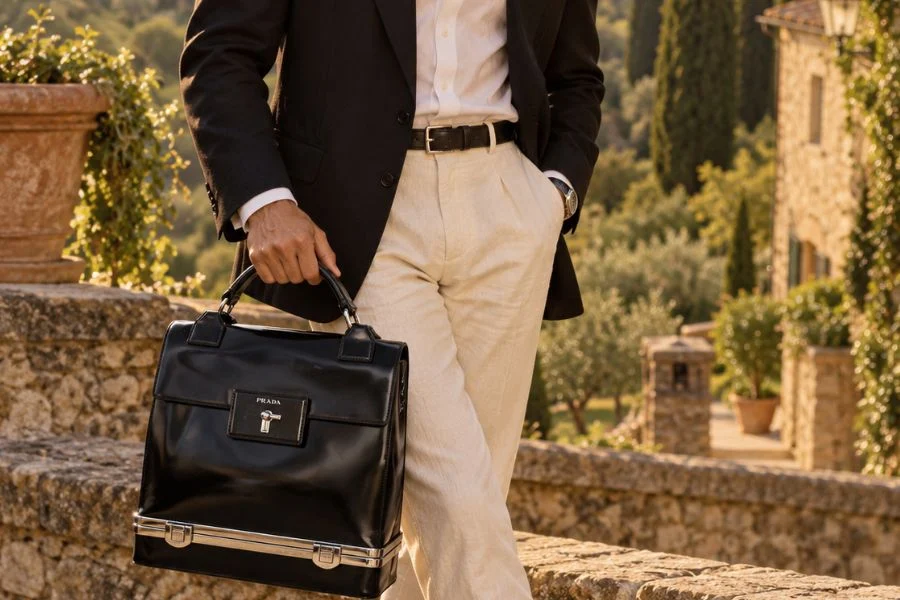
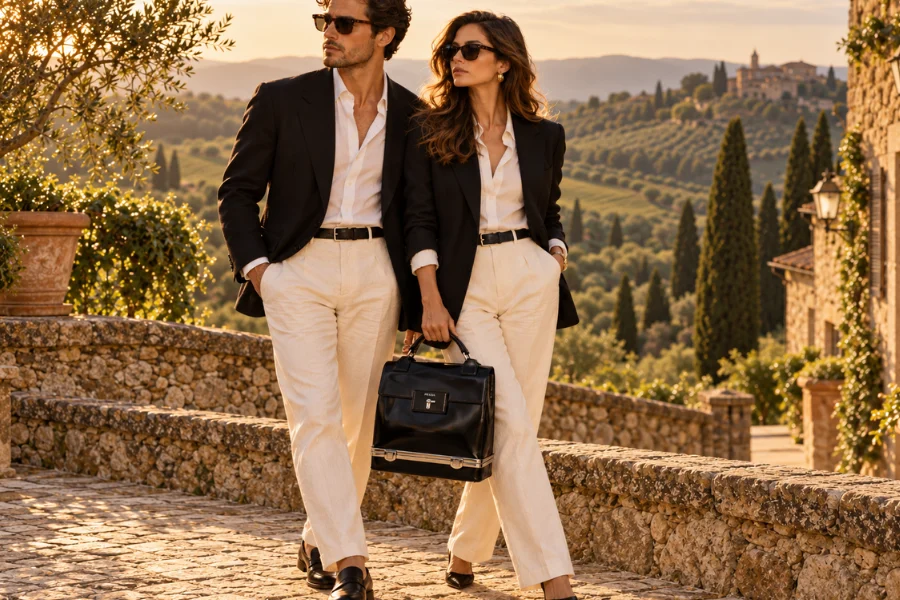
It is completely gender-neutral. The black patent leather, strong rectangular proportions and substantial polished hardware create a design that can look magnificent with both men's and women's wardrobes. Imagine it carried with a beautifully tailored black coat, cream trousers and polished leather shoes. Or with an elegant Prada dress. The bag doesn't rely on femininity or masculinity.
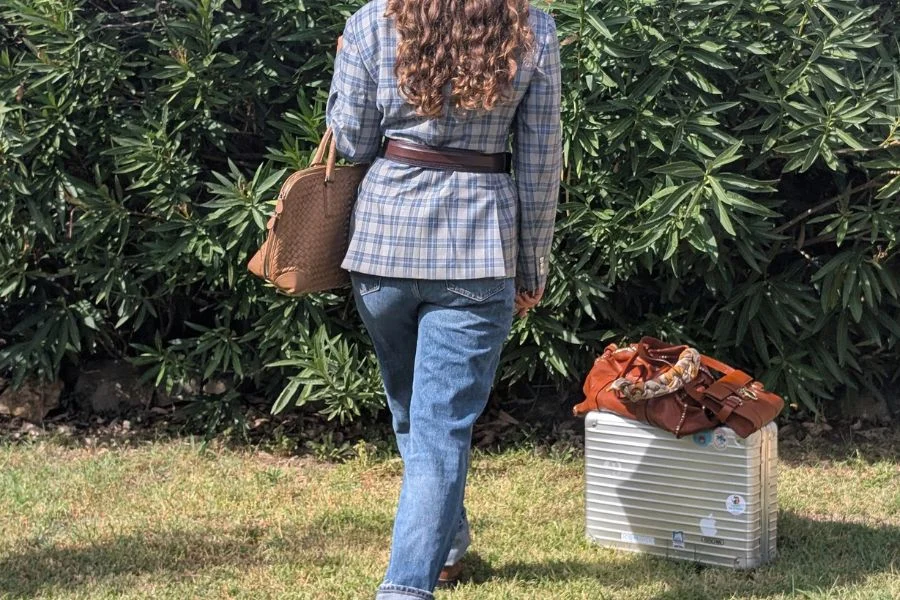
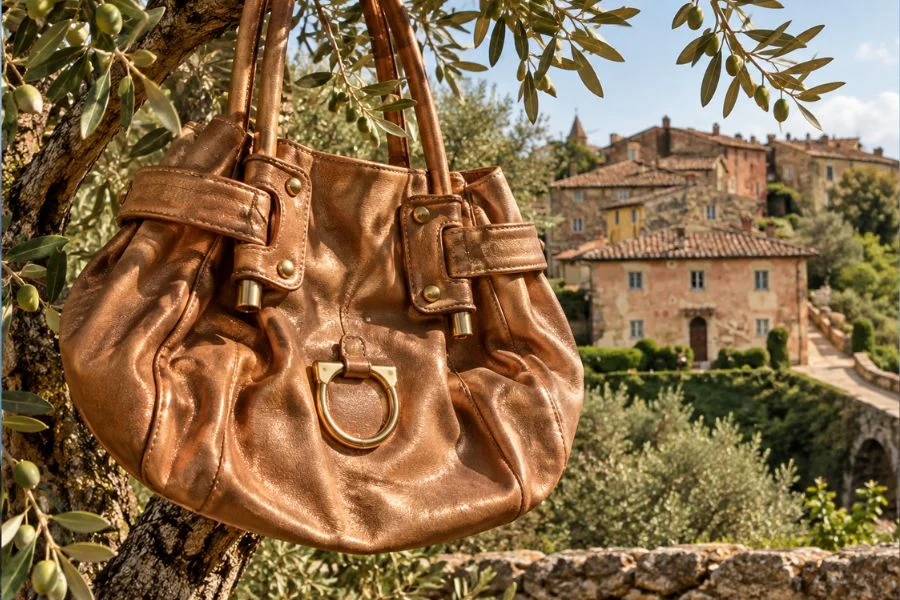
It relies on confidence. That is why I chose to photograph its styling potential with both male and female models in a Tuscan setting. The photographs are editorial illustrations of how the bag could be styled, rather than actual product photographs. For me, this is genuine personal style: owning something unusual because you appreciate the object itself.
Why I Am Asking €2,500
I have decided to offer this exceptional Prada handbag on Vestiaire Collective for €2,500. Some people may consider that a considerable asking price for a handbag from 2012. I understand that perspective. But I do not value this piece simply by comparing it with an ordinary used Prada bag.
I look at the unusual engineering, substantial metalwork, softly lined compartments, elegant patent leather and excellent preservation. I also consider its connection to a particularly experimental period of Miuccia Prada's design history. It has had only one owner and has seen very little use. The interior is almost immaculate. The original Prada dust bag accompanies it.
I am aware that some elaborate Prada handbags from the Autumn/Winter 2012 collection were originally sold for several thousand dollars. That provides interesting historical context, although I have not established the original retail price of this exact black version.
The €2,500 price is therefore my personal collector's valuation, not a formally authenticated market appraisal. I am not selling it because it has suddenly gone out of fashion. I am offering it because I believe there are collectors who recognise and appreciate unusual pieces of Prada design history. And I would much rather see it go to somebody who understands what makes it special.
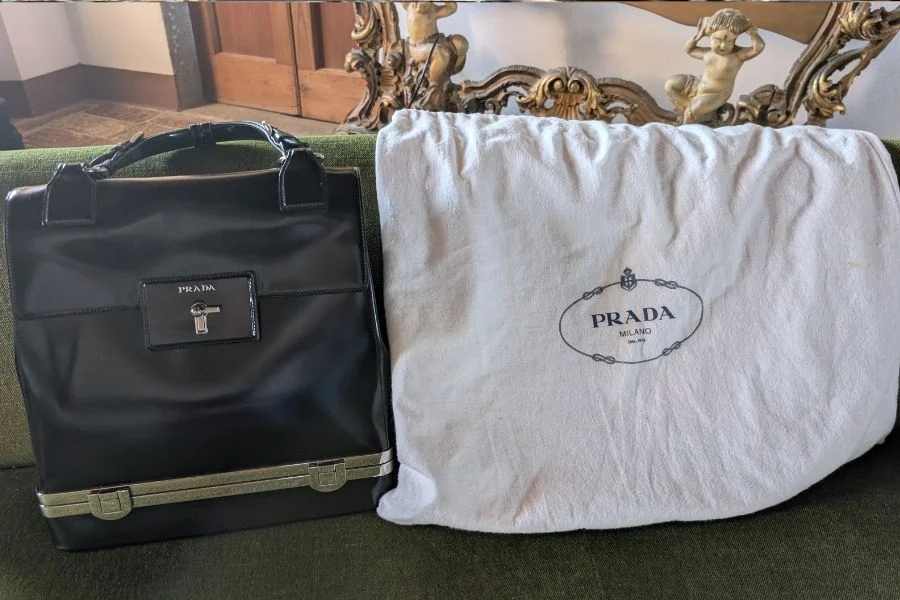
It has a strong, structured shape, a distinctive front closure and a polished metal frame running around its lower section. The surprise comes when you open it. There is a separate, hinged, metal-framed lower compartment, lined in soft beige leather. It is like finding a miniature trunk inside a handbag. I have handled many Prada bags over the years, and this is not a design I come across on the vintage market.
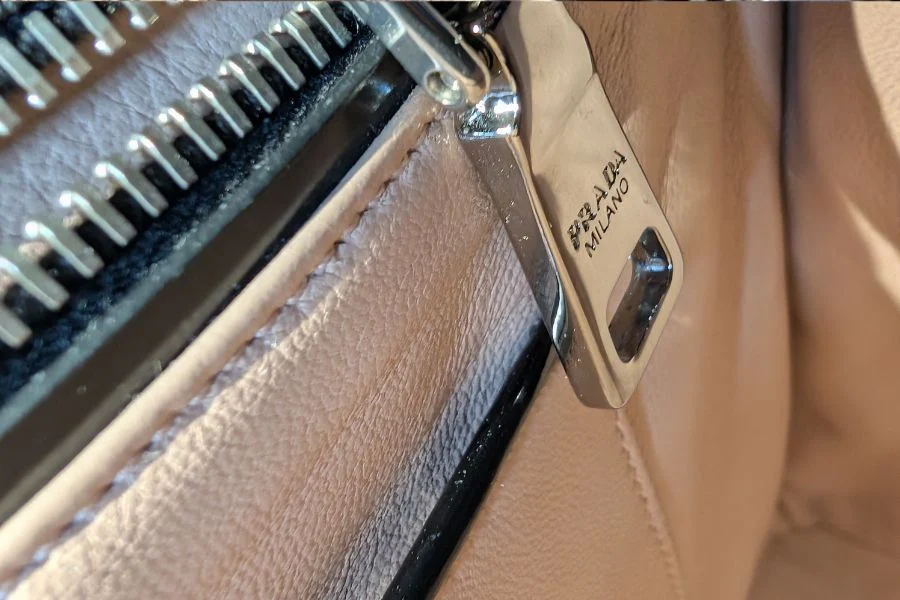
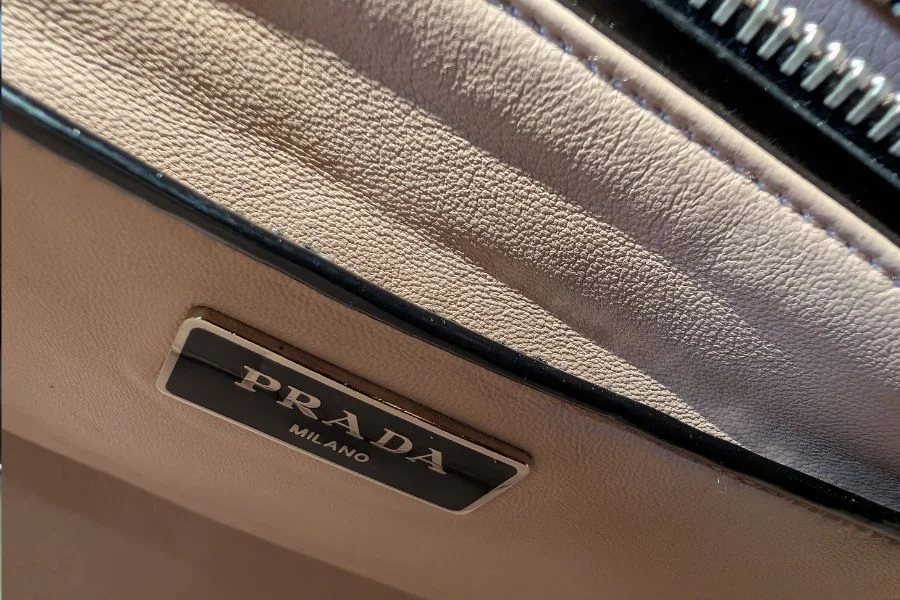
Look at the hardware
When I look at a vintage designer bag, I look past the logo. A logo can be copied. So can a shape. What is hard to copy cheaply is construction.
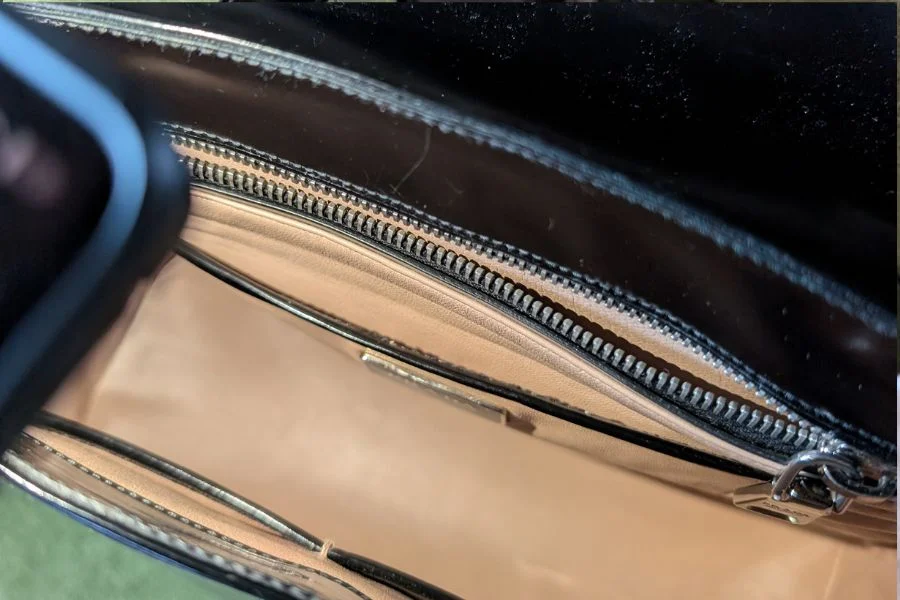
On this Prada the polished metal runs around the lower part of the bag, with finished hinges and branded closures. The handle is fixed with metal rings and carefully made leather fittings. The front closure is heavy and good to touch, and even the small hardware carries Prada engraving. Inside, the zipped pocket has its own Prada Milano metal pull, and the plaque is a proper metal plate, not a print on fabric.
The metal is not there for decoration. It holds the bag’s shape and it is how the compartments open and close. That is what I mean by an engineering masterpiece. And it is heavy. For me, that is craftsmanship worth keeping.
The leather interior is almost immaculate
It has had only one owner and has been used very rarely. The black patent still has its gloss, though there are minor surface marks from age and storage, and you can see them in my photographs. Some might respond to specialist treatment. I would never try ordinary leather cream or household polish on vintage patent.
The inside is another story. The pale beige leather looks almost untouched: no marks, no stains, no discolouration from things carried around, none of the wear you usually find inside an old bag. The lower compartment is just as good, and opening it reminds me of the inside of a fine travel case. Glossy black outside, cold polished metal, soft leather within. The inside of a bag should matter as much as the outside.
Prada furniture and the same idea
Perhaps I see this bag the way I do because of those two sofas. In both, velvet gives the comfort and metal gives the structure. The bag does the same thing with its soft leather lining and its polished frame, and the patent outside gives it the shape. For me it is a design object that you happen to carry.
Does Prada still make handbags like this?
I have seen exclusive Prada handbags offered at around €17,000, so I know how expensive new Prada can be. But I don’t see bags made this way in its boutique collections today.
Prada still makes beautiful, technically accomplished things, and I am not saying every modern bag is worse. But some of the older designs had a generosity of material, an experimental construction and an individuality that I find much harder to come across now. That is why I tell collectors to look at the vintage market.
Why I prefer rare vintage Prada to another Hermès lookalike
I admire Hermès craftsmanship. But I am tired of seeing the same famous handbag shapes everywhere, from the originals to the lookalikes to the counterfeits. I would rather carry something people can’t name from across the room. Something that makes another collector stop and ask, “What is that bag?”
This Prada does exactly that. There is no big logo on the outside, and it doesn’t rely on anyone recognising its shape. The form, the polished metal and the way it opens do the talking.
A bag for a woman or a man
With its black patent, heavy metal fittings and strong geometric lines, it is almost a briefcase. It would look wonderful with a well-tailored Prada coat. I can just as easily see a man carrying it with a black wool overcoat, well-cut trousers and polished shoes. Choose a piece because you admire its design, not because a campaign tells you who should wear it.
The Luxury of Owning Something You Cannot Easily Replace
I have never believed that luxury is simply about spending more money.
Some of the most interesting pieces in my collection are preloved.
They have history. They have character. They represent moments in fashion when designers approached familiar objects differently.
My vintage Prada shoes, coats, handbags and furniture are all expressions of that philosophy.
This black patent leather bag may be one of the most fascinating examples.
It is a reminder that a handbag can be more than a fashion accessory.
It can be an exercise in materials, structure, proportion and engineering.
A beautiful object that deserves to survive long after the season in which it was introduced.
You can walk into Prada today and purchase a new handbag. But you cannot simply walk into a boutique and expect to find this particular piece of design history waiting on a shelf.
And that is why, for the right collector, I believe it is worth preserving.
My rare black patent leather Prada archival handbag is available through my Vestiaire Collective collection, offered at €2,500.
What we can no longer easily replace
You can walk into a boutique and buy a new handbag. You can’t walk in and buy this one.